Pediatric Nursing in Durham Region: How Nurses Support Children at Home and at School
When a child has medical needs, the questions come fast.
Can we manage this at home? What happens when school starts back up? Who helps us when we are not sure what to do next?
These are some of the most common questions families ask, and they rarely have simple answers.
At Partners in Community Nursing, our nurses provide care for children and families across Durham Region, in homes and in schools.
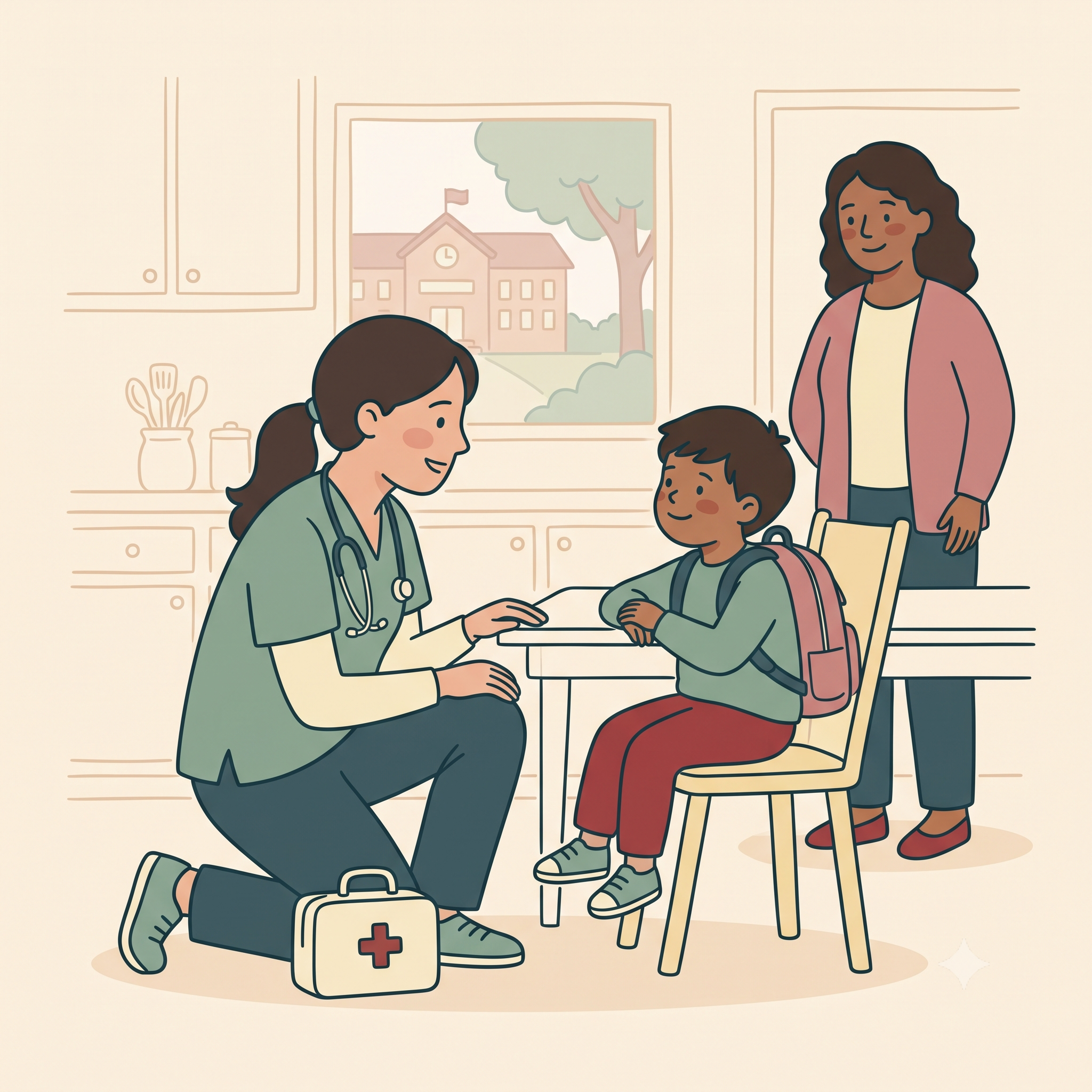
PICN nurses providing care for children and families across Durham Region, in homes and in schools.
This is about more than clinical tasks.
It is about helping a child stay where they belong, with their family, in their classroom, in their routine, while still getting the care they need.
What is pediatric community nursing?
Pediatric community nursing is nursing care for children delivered outside of a hospital.
Care comes to the child, right where they live. For many families that also means respite services and caregiver relief, so the people caring for a child around the clock get trusted, qualified support and a real chance to rest.
Depending on the care plan, that support may include:
Assessment and ongoing monitoring
Medication administration and management
Wound care and dressing changes
IV therapy and injections
Support with feeding tubes and other specialized equipment
Chronic condition support
Respite services and caregiver relief
Teaching parents and caregivers what to watch for
Communicating with the care team when something changes
Every child is different.
A child recovering from surgery, a child living with a chronic condition, and a child with complex medical needs may all need very different kinds of support. That is why the care plan is built around the child, not the other way around.
What does a nurse do for a child at home?
The short answer is that a nurse handles the clinical care so the family can go back to being a family.
In practice, that can look like:
Carrying out the medical parts of a care plan
Watching for changes and catching them early
Keeping a child comfortable during procedures
Helping parents feel confident with equipment and routines
Giving caregivers a break they can actually trust
Documenting and reporting so nothing gets lost between appointments
That last part matters more than people expect.
Families managing a child's medical needs often become the record keeper, the scheduler, the advocate and the caregiver all at once. Having a nurse in the home takes some of that weight off.
Can a nurse support a child at school?
Yes. This is one of the parts of community nursing that families are often surprised to learn about.
Many children who need nursing care are perfectly able to attend school. What they need is for the care to come with them.
Nursing support in a school setting can help by:
Delivering scheduled care during the school day
Supporting a child with specialized equipment or medical needs
Responding appropriately if something changes
Working alongside school staff so everyone understands the plan
Helping a child stay included in the classroom and in school life
This is what makes the difference between a child missing school and a child attending school.
For a lot of families, that is not a small thing. It is the difference between a child's world getting smaller and a child's world staying open.
When should a family consider pediatric nursing support?
Usually earlier than families think.
It may be worth exploring nursing support if:
A child is being discharged from hospital with ongoing medical needs
A child needs medication or treatment during the school day
A parent is managing equipment or procedures they were trained on quickly
A child has a chronic condition that needs monitoring
A caregiver is exhausted and has no backup
A healthcare provider has recommended ongoing nursing care
That second-to-last one deserves saying out loud.
Caregiver burnout is real, and it is not a sign that anyone is failing. It is a sign that a family has been carrying something that was never meant to be carried alone.
How is nursing care for a child different from care for an adult?
It is different in almost every way that matters.
Children are not small adults. Doses, assessments, communication and comfort measures all work differently. A nurse caring for a child has to read what a child cannot always say.
Pediatric care also means caring for the people around the child:
Parents who are learning as they go
Siblings who notice everything
Teachers and school staff who want to help but need guidance
Caregivers who need to trust the person walking into their home
Consistency matters enormously here. A child who sees the same nurse builds trust, and a child who trusts their nurse has an easier time with care.
What does this mean for parents and caregivers?
Mostly, it means not doing it alone.
Families often tell us the hardest part is not the medical care itself. It is the constant low-level worry of wondering whether they are doing it right.
A registered nurse can help by:
Explaining what is happening in plain language
Showing a parent how to manage a task rather than just doing it
Answering the questions that feel too small to call anyone about
Flagging changes before they turn into emergencies
Making the care plan feel manageable instead of overwhelming
Those questions are never too small. If a parent is wondering about it, it is worth asking.
Pediatric nursing across Durham Region
PICN provides community nursing and home care services across Durham Region.
That includes support for children and families in communities such as:
Pickering
Ajax
Whitby
Oshawa
Courtice
Bowmanville
Uxbridge
Port Perry
Beaverton
Newcastle
Newtonville
Surrounding Durham Region communities
Care is delivered directly in homes and schools.
For families searching for pediatric nursing support close to home, local matters. It means a team that knows the region, knows the schools, and understands what receiving care at home actually looks like day to day.
Why this matters
Children do best in their own environment.
In their own bed. At their own kitchen table. In their classroom with their friends.
Pediatric community nursing exists so that a child's medical needs do not have to pull them out of their own life.
At PICN, the goal is practical, compassionate care that supports the child and steadies the family around them.
Looking for pediatric nursing support in Durham Region?
If your child needs nursing care at home or at school, PICN can help you understand what services may be available and what kind of support may fit your family's situation.
Contact Partners in Community Nursing to learn more about pediatric and school nursing services in Durham Region.